Alcohol has long been associated with various health risks, such as liver disease or impaired judgment, but a new advisory from the U.S. Surgeon General has brought renewed attention to its link with cancer. (Source: U.S. Department of Health and Human Services)
Despite increasing public health discussions, awareness of the connection between alcohol and cancer remains inconsistent. To better understand public perception, we conducted an online survey among 1,002 U.S. adults (18+) to shed light on what Americans know—and don’t know—about alcohol’s potential dangers.

How Much Do Americans Know About Alcohol and Cancer?
- Half of Americans acknowledge the alcohol and cancer link: Following the Surgeon General’s announcement, nearly half of participants said they believe alcohol consumption increases cancer risk.
- Liver cancer is the most commonly recognized risk: Among those who believe in the connection, most associate alcohol with liver cancer, while fewer recognize its link to other associated cancers.
- News sources play a major role: Most people first learn about the alcohol and cancer connection from the news, with secondary sources including healthcare providers, social media, and conversations with friends or family.
Should Alcohol Carry a Cancer Warning Label?
Tobacco products have carried health warnings for decades, but should alcohol? According to our survey, three in five Americans believe alcoholic beverages should display a Surgeon General’s warning about cancer risks. This suggests strong public support for greater transparency about alcohol’s health effects.
Will People Change Their Drinking Habits?
Despite increased awareness, nearly half of alcohol consumers (21+ years old) remain unconcerned about the associated cancer risks and do not intend to change their drinking habits. Only a small portion of drinkers—about one in ten—say they would quit alcohol entirely based on this information.
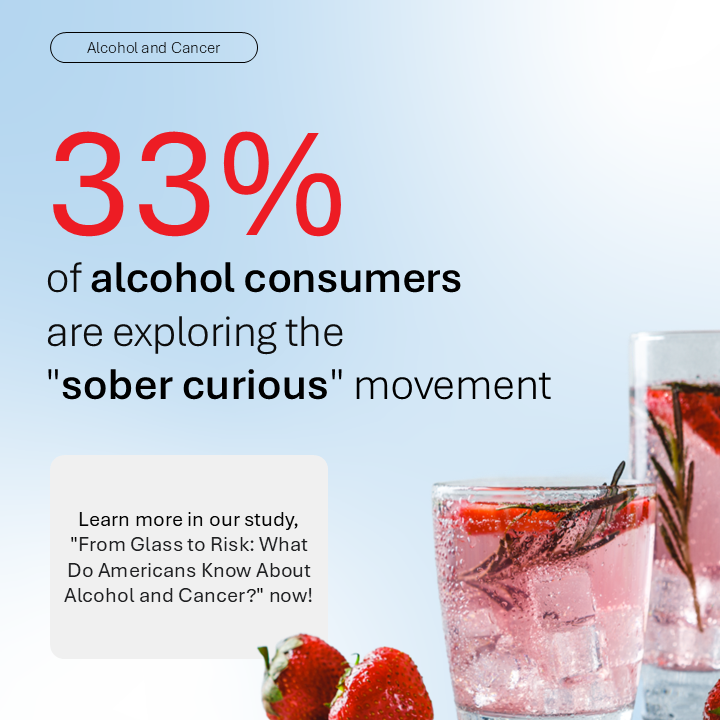
However, around 33% of alcohol consumers (21+) are exploring the “sober curious” movement, questioning their relationship with alcohol and considering sobriety without full commitment—an indication that growing awareness of alcohol and cancer risks may encourage more consumers to embrace moderation and mindful drinking rather than complete abstinence. To learn more about this trend, check out our upcoming 2025 Beyond the Buzz: Understanding Sober Curious Movement study.
The Bottom Line
While awareness of alcohol’s link to cancer is rising, there’s still a gap in understanding. Public health initiatives, clearer labeling, and more education could help bridge this divide—ensuring that Americans have the knowledge they need to make informed choices about their drinking habits.
Download the report and contact us today to explore your research needs!