
Artificial intelligence is rapidly influencing how travelers search for destinations, plan trips, and manage their travel experiences from start to finish. As hotels, airlines, and major booking platforms introduce new AI powered travel tools and services, traveler expectations are evolving and reshaping the travel industry.
Leger USA’s Uncharted Territory: Exploring Travel Behaviors in an AI World Report highlights where travelers already feel comfortable using AI for trip planning and where they see the greatest potential for future adoption. With nearly half of Americans expecting to increase their reliance on AI for travel planning in the next two to three years, the industry has entered a pivotal moment in redefining convenience, personalization, and trust through emerging travel technology.
A New Traveler Mindset Is Taking Shape Thanks to AI
The study identifies three attitudinal profiles that help clarify how travelers view the role of AI in their planning and decision making. These are not formal segments but rather useful indicators of comfort levels and expectations as AI becomes more present in travel planning tools.
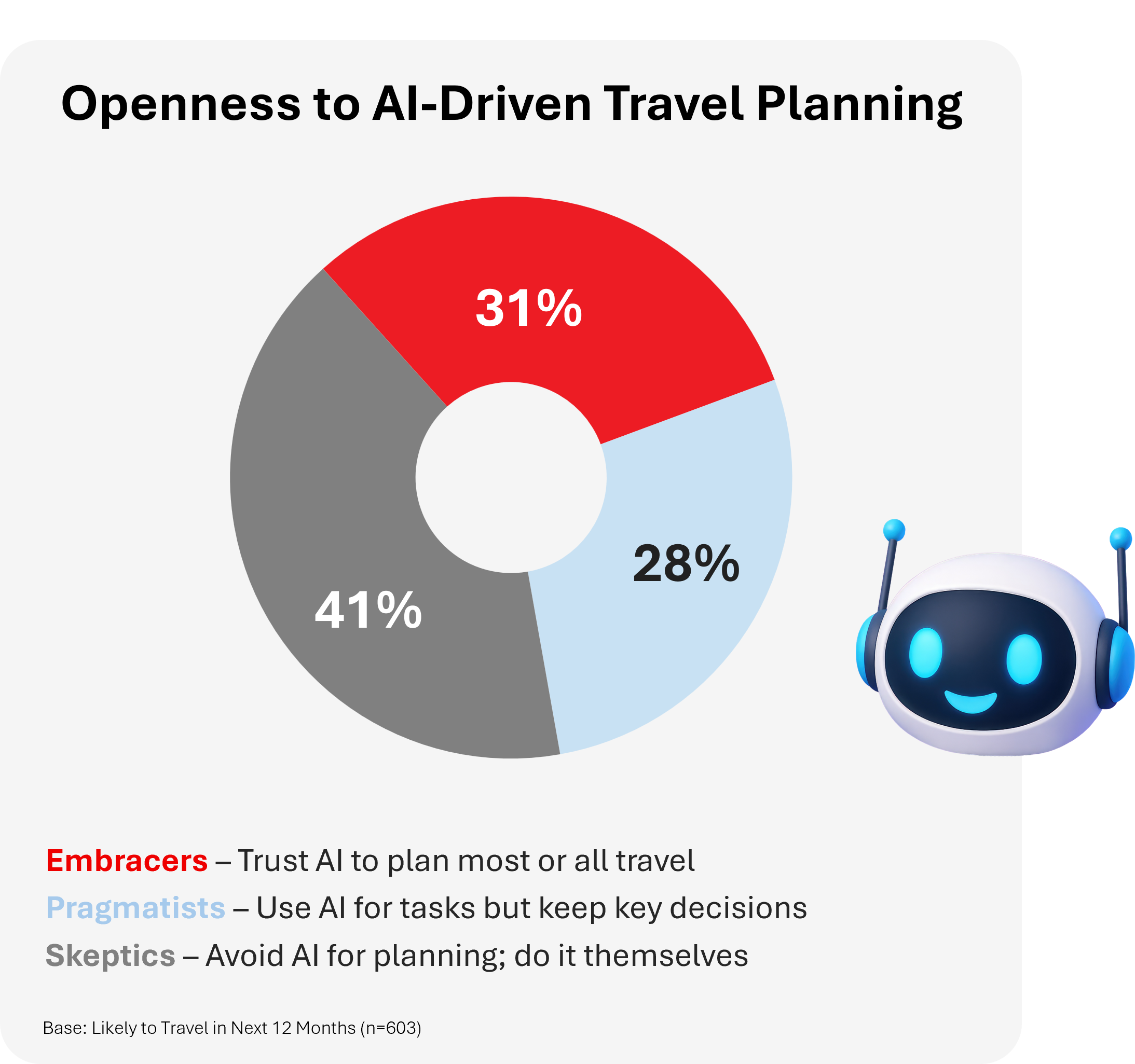
- AI Embracers – Travelers who are comfortable letting AI plan most or all aspects of their trip – from destination to activities. They show high trust and enthusiasm toward AI involvement in travel decisions (31%)
- AI Pragmatists – Travelers who are open to using AI with conditions or limits. They rely on AI for simple tasks, or when they can set key preferences and review details before finalizing plans. (28%)
- AI Skeptics – Travelers who are uncomfortable or unwilling to let AI make travel decisions. They show low trust in AI’s ability to plan effectively and prefer to manage trip details themselves. (41%)
Together, these mindsets reveal a consumer landscape shaped by growing curiosity, varying levels of trust, and a desire for control. They also highlight the distance between travelers who are ready for greater automation and those who still need reassurance around accuracy, privacy, and reliability in AI–powered travel experiences.
Travelers Expect Greater AI Usage in the Near Future
Interest in AI for travel continues to grow. Half of travelers expect to rely more on AI in the next two to three years, showing that comfort with these tools is gradually increasing across different types of travelers. This shift reflects a steady move toward using technology to make planning easier and more efficient.

Looking at specific tools, AI chatbots offer a helpful signal of what may come next. 18% of travelers plan to use an AI chatbot to plan or book a trip in the next year. Interest is significantly higher among Millennials, Gen Z adults, and parents with children at home, which suggests these groups are more open to this type of support during the booking process.
Travel providers are also responding to this growing interest in AI-supported planning. Expedia has introduced an AI travel planning experience designed to help travelers refine ideas and explore options more easily. Booking.com has launched its AI Trip Planner to simplify early-stage decision making, and Kayak has integrated conversational search tools that allow users to explore destinations through natural language queries. These developments reflect how major travel brands are beginning to incorporate AI into the planning and booking process to create a more convenient and efficient experience.
Where Travelers Feel Most Comfortable Using AI
Travelers show the most comfort with AI in areas where it helps with search, organization, and discovery. They are open to using AI for inspiration, research, and early–stage planning, which fits with how many people already use digital tools to explore destinations or compare options.

These tasks highlight where travelers see AI as a helpful support tool that can make planning easier without taking over key decisions.
Building Trust and Transparency in AI: A Must for the Travel Industry
Interest in AI is growing, but travelers are clear about what would make them more likely to use AI in their planning. The top factors include:
- Stronger data privacy (29%)
- Better accuracy and up-to-date recommendations (28%)
- Easier user experience (27%)
- Comparisons across hotel brands with transparent pricing and reviews (20%)
- Access to exclusive hotel deals or dynamic pricing (20%)
Together, these priorities show that travelers want AI tools they can trust and understand. Accuracy and clarity remain important when deciding how much to rely on AI during trip planning, and these expectations will influence how providers develop future AI features.
What This Means for the Future of Travel
The travel industry is entering a phase where AI is shifting from an emerging concept to a practical companion that can support different stages of the traveler journey. To encourage broader adoption, travel providers will need to focus on reliability, transparency, and user control. Travelers do not expect AI to make decisions for them. They want tools that simplify planning, surface relevant recommendations, and offer steady support when plans change.
To learn how traveler expectations around AI are evolving and where the biggest opportunities lie, connect with Leger USA.
For deeper insights and custom research support, subscribe to our newsletter.