

This is the sixth edition of Leger’s Youth Study. This annual study helps organizations reflect on and refine their relationships with millennials and Gen Z. We surveyed 3,015 Canadian members of these generations to explore their perceptions of their employment, finances, and future. Download our free report to learn more!
DOWNLOAD THE FREE REPORT BY COMPLETING THE FORM BELOW.
KEY FINDINGS OF THIS YEAR’S YOUTH STUDY ON MILLENNIALS AND GEN Z
MILLENNIALS AND GEN Z ARE INCREASINGLY PESSIMISTIC ABOUT THE FUTURE OF THE PLANET
This year, extreme weather events (including droughts, tornadoes, hurricanes, wildfires, heat waves, and more) impacted many Canadians’ lives.
For the younger generations, the impact of climate change is a growing source of stress and concern. Furthermore, they are becoming increasingly despondent about their ability to limit the impacts of climate change (37% vs. 30% in 2022).
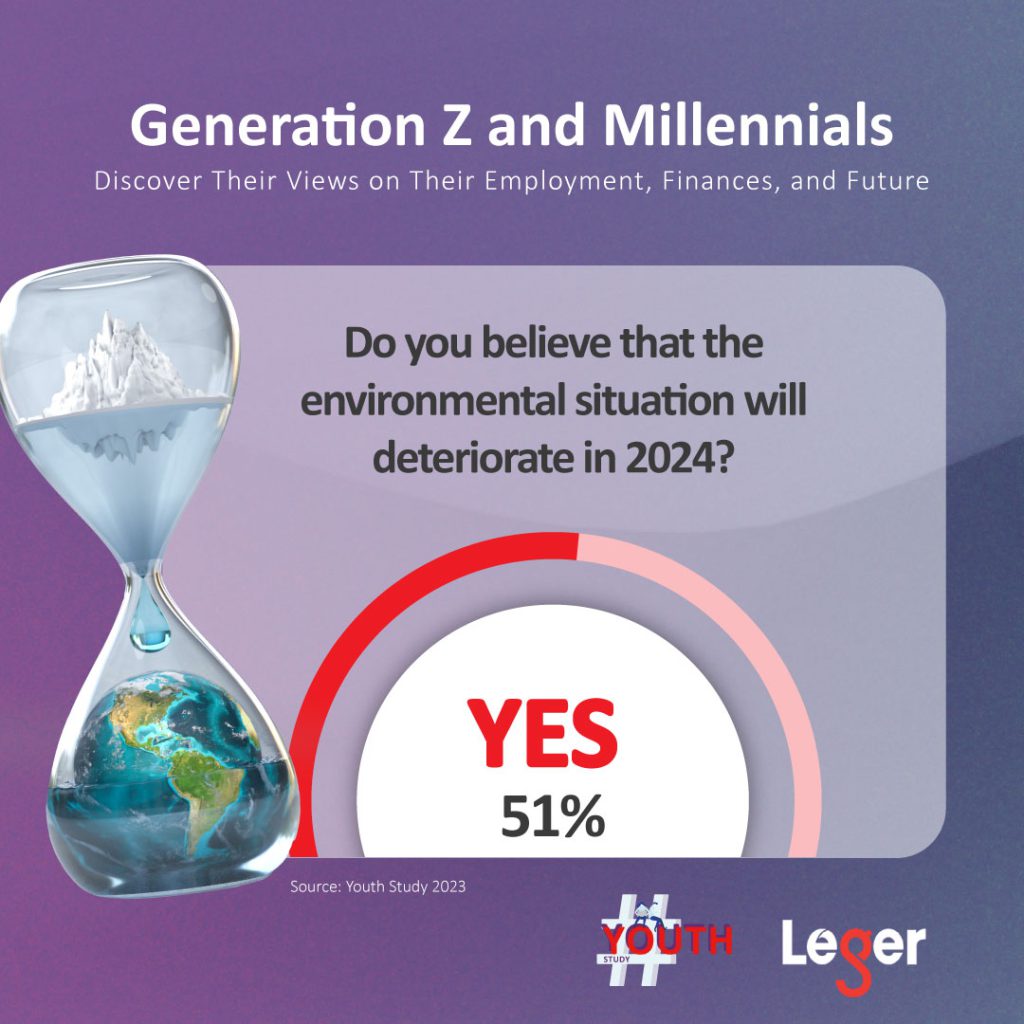
In addition, 51% of Canadian millennials and Gen Zers believe that the environmental situation will deteriorate in 2024.
THE YOUNGER GENERATIONS CONTINUE TO FEEL THE IMPACT OF INFLATION
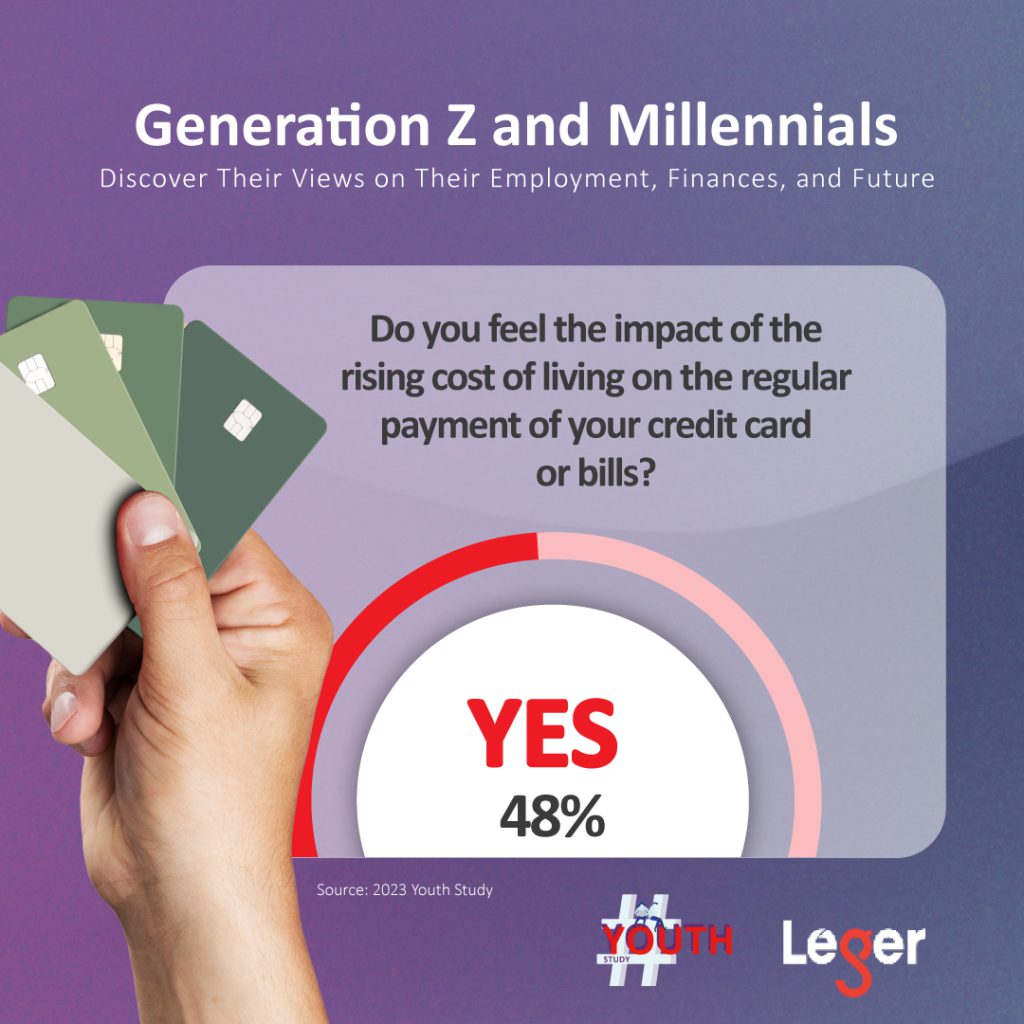
In 2023, Canadians grappled with rising interest rates and widespread inflation. Nearly half (48%) of Canadian millennials and Gen Zers say they feel the impact of the rising cost of living on the regular payment of their credit card or bills (an 8-point increase from 2022).
Among millennials and Gen Z, almost three-in-four renters (72%) feel that their rent accounts for too large a portion of their expenses. In addition, the majority of the younger generations are scaling back their spending and consumption due to the rising cost of living, with their savings and food spending being the most affected (73% and 68% respectively). However, there has been a marked improvement in financial literacy among Generation Z, with more than 2 in 5 (43%) regularly informing themselves about different financial products, representing a significant 10-point increase from last year.
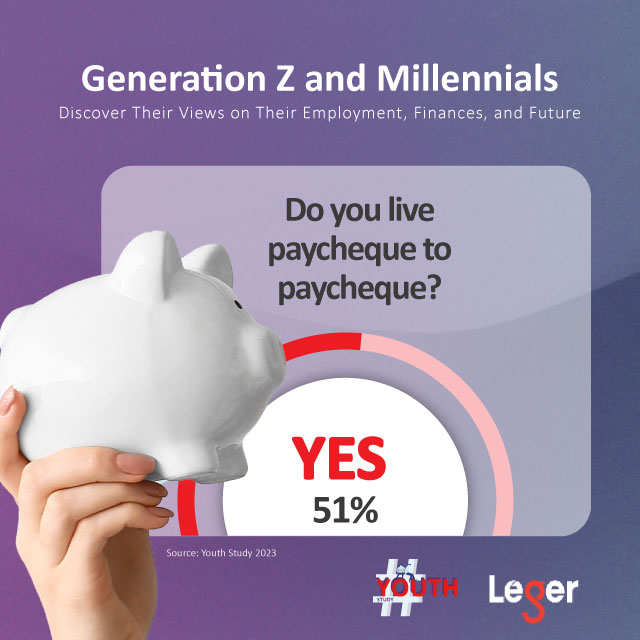
In addition, over half (51%) of Generation Z and millennials say they live paycheque to paycheque.
15% OF YOUNG CANADIANS INTEND TO QUIT THEIR JOBS IN THE NEXT YEAR
This proportion is higher (22%) among members of Generation Z and lower (11%) among millennials. They intend to quit primarily for salary-related reasons; however, our exclusive HR Benefits Simulator demonstrates that the optimal combination of employment conditions can attract or retain young workers.
NEW THIS YEAR: THE HR BENEFITS SIMULATOR
Do you need to attract and retain millennial and Gen Z employees? Look no further! Our exclusive HR Benefits Simulator will help you understand which potential job offers are most attractive to these segments of the workforce.