

This edition explores the future of wearing masks in the United States and Canadians’ perspectives on their second vaccine dose.
We explored where Americans will continue to wear masks, and whether they assume that people wearing a mask have not been vaccinated. The questions about mask-wearing were only asked to Americans because a greater proportion of the American population is currently fully vaccinated. With second doses of COVID-19 vaccines being available earlier in certain provinces, we also explored Canadians’ perspectives on receiving a second dose.
This survey is conducted in collaboration with the Association for Canadian Studies (ACS) and published in the Canadian Press. This series of surveys is available on Leger’s website.
Would you like to be first to receive these results? Subscribe to our newsletter now.
DOWNLOAD THE FULL REPORT AT THE END OF THIS ARTICLE.
The Future of Wearing a Mask in the United States
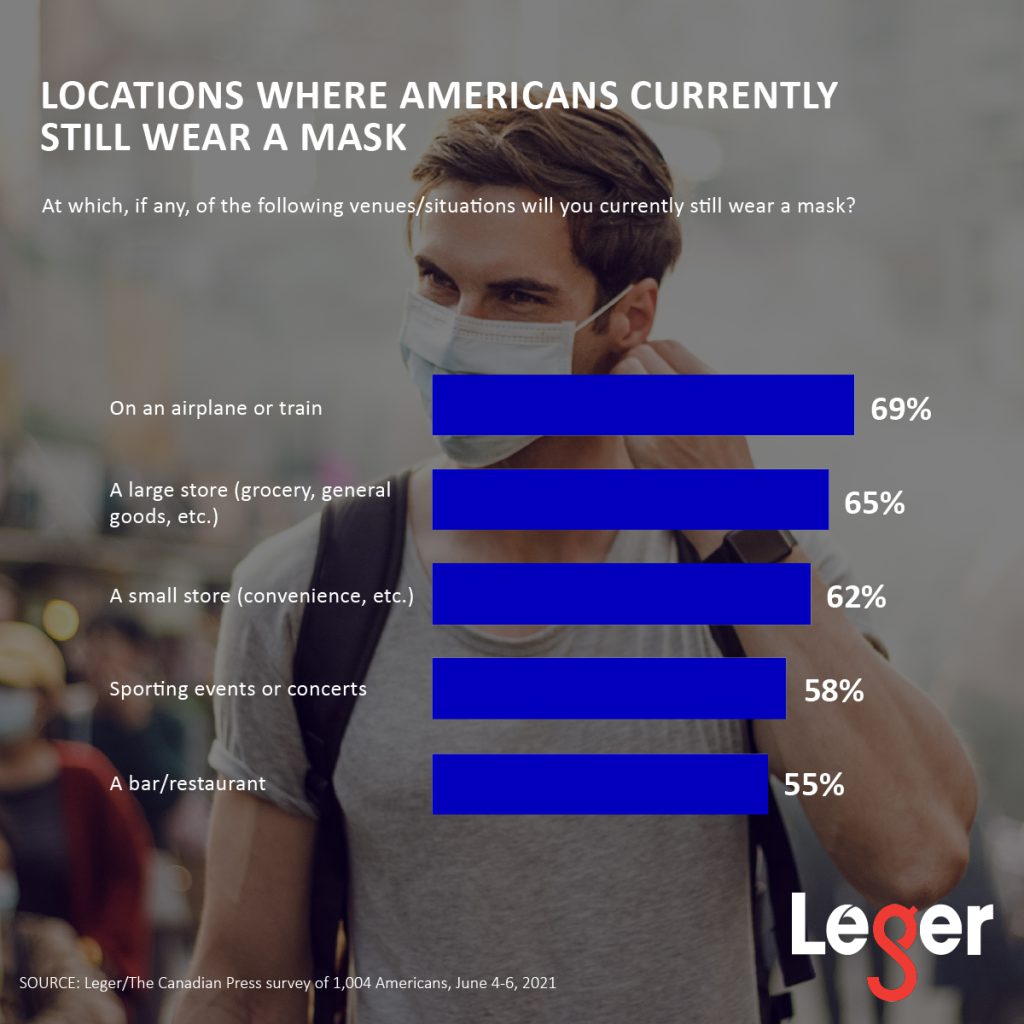
- Americans are most likely to indicate they will currently still wear a mask on airplanes or trains (69%), at large stores (grocery, general goods, etc.) (65%) and/or in small stores (convenience stores, etc.) (62%).
- More than three-in-ten Americans who still wear a mask on airplanes/trains, at large stores, at small stores, at sporting events or concerts, and/or at bars/restaurants think they will not stop wearing a mask at/in each of these until 2022.
- 19% of Americans assume that if they see someone wearing a mask, that person has not been vaccinated.
Receiving a Second Dose of AstraZeneca
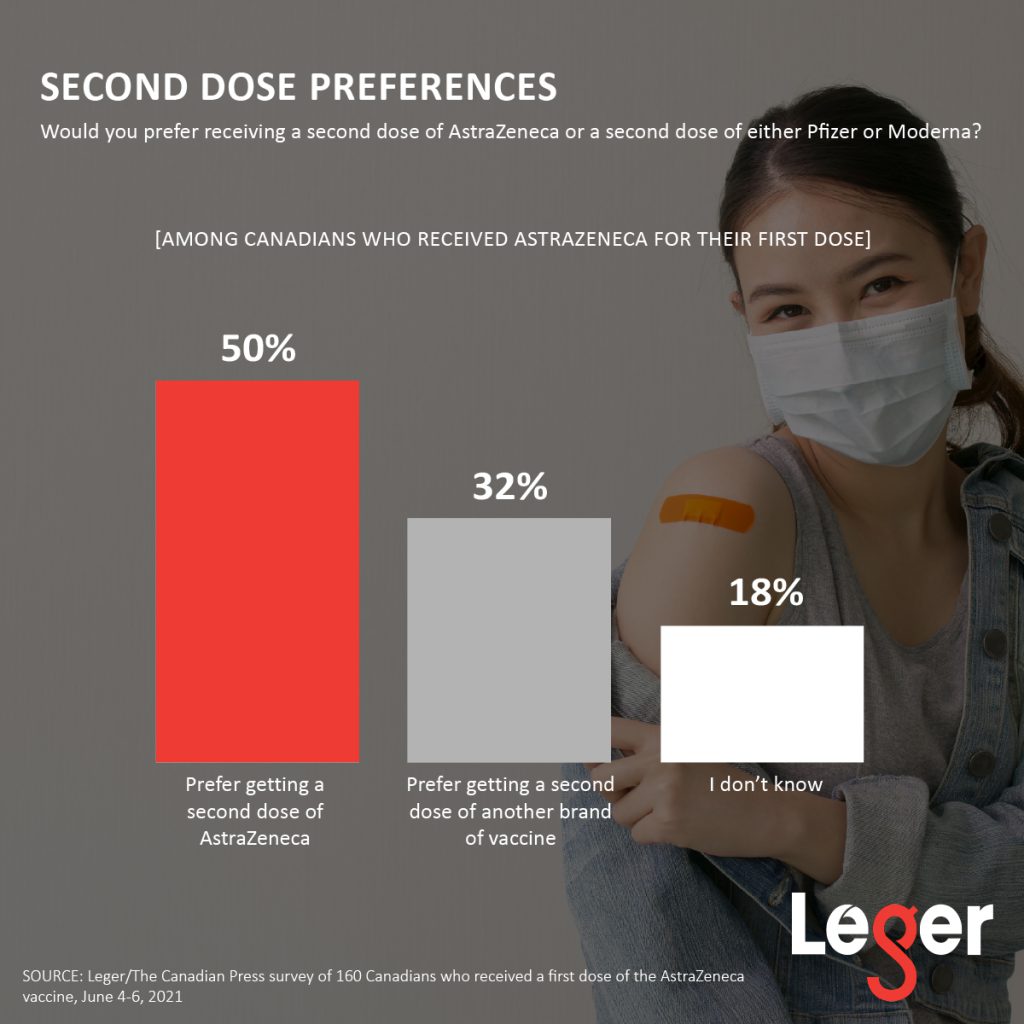
- 50% of Canadians who received a first dose of AstraZeneca would prefer to get a second dose of AstraZeneca, 32% would prefer getting a second dose of another brand of vaccine, and 18% don’t know what they would prefer.
METHODOLOGY
This web survey was conducted from June 4, 2021 to June 6, 2021 with 1,539 Canadians and 1,004 Americans, 18 years of age or older, randomly recruited from LEO’s online panel.
For comparison, a probability sample of 1,539 respondents would have a margin of error of ±2.5%, 19 times out of 20, while a probability sample of 1,004 would have a margin of error of ±3.09%, 19 times out of 20.
THIS REPORT CONTAINS THE RESULTS FOR THE FOLLOWING QUESTIONS AND MORE!
- Will you get your second dose of the COVID-19 vaccine?
- Would you prefer receiving a second dose of AstraZeneca or a second dose of either Pfizer or Moderna?
- At which, if any, of the following venues/situations will you currently still wear a mask?
- When do you think you will stop wearing a mask at…
- If you see someone wearing a mask, do you assume the person has not been vaccinated?