

This year, new Canadian front-of-pack (FOP) nutrition symbols are beginning to appear on grocery shelves, calling out products high in sugar, sodium, or saturated fat. For shoppers, that small black-and-white symbol is hard to ignore. For manufacturers, it represents more than a regulatory change. It signals a shift in how health is communicated, interpreted, and acted on at shelf.
But the bigger story is this: Canadians were already rethinking what “wellness” means in their food choices. The new labels do not create that shift; they accelerate it.
Our latest research shows that 51% of Canadians say health and wellness play a larger role in the foods and beverages they choose today than they did a year ago, raising a more important question: what does that attention actually look like in practice.
Wellness Is Personal and Practical
For most Canadians, wellness is not about biohacking or medicalized products. Only 7% actively seek science-led or medically informed solutions. The majority (59%) prefer to focus on food choices and lifestyle habits as the foundation of wellness, rather than relying primarily on science- or medically driven innovations. Those intentions are already translating into behaviour.
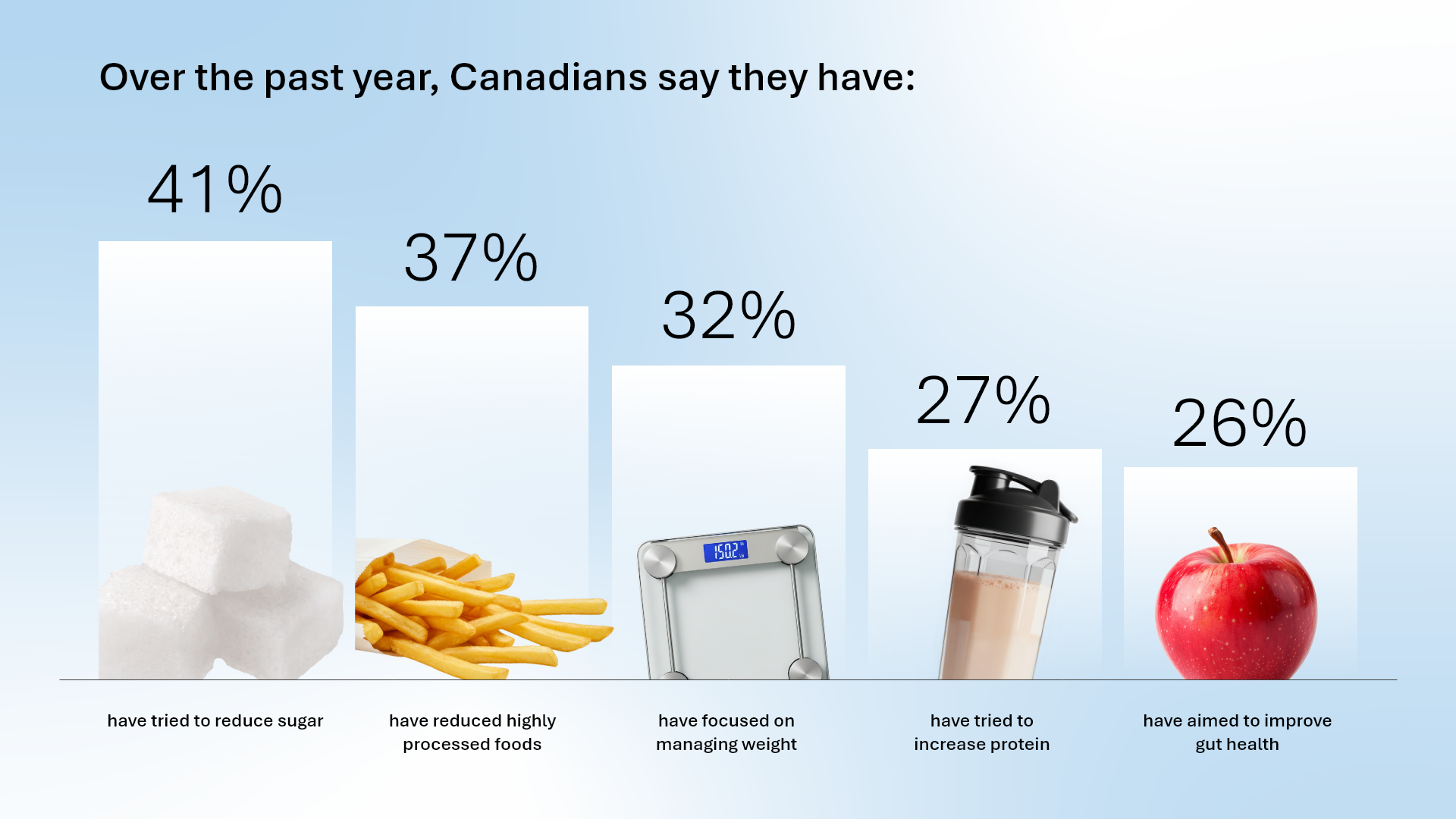
At the same time, 59% of Canadians say they regularly avoid certain foods or beverages altogether. The reasons are not always purely medical: taste, cost, cultural practices, and ethical considerations all play a role, even if health remains a major driver for many.
More than half (56%) say they have taken steps to manage how much they eat, most commonly by reducing portion sizes.
The common thread is clear: Canadians are actively managing both what goes into their bodies and how much of it. That is the context in which front-of-pack labelling lands.
Will Packaging Change Behaviour?
When asked directly, most Canadians say it is easy to identify products that meet their dietary or personal needs, with 61% describing the task as easy. On the surface, packaging is not seen as a primary barrier.

Does that mean packaging does not matter? Not quite.
There is a noticeable divide: younger Canadians aged 18 to 24, those from racialized communities, and those following structured or religious diets are significantly more likely to say identifying appropriate products is difficult, with up to one in five in these groups reporting challenges.
And 60% of Canadians overall agree that clearer front-of-pack information would be helpful.
The introduction of federal FOP symbols directly addresses nutrients of concern such as sugar, sodium, and saturated fat, which are already top of mind for many consumers. In that sense, regulation is aligning with behaviour that is already underway.
But clarity is not just about compliance; it is about trust.
French-speaking Canadians are significantly less confident in the information they see on packaging. That gap creates risk for brands operating nationally, where accuracy and linguistic clarity play a direct role in brand credibility.
There Is No Single Wellness Consumer
One of the most important findings from this research is just how diverse Canadian food behaviours really are.
One in four Canadians follows some type of structured diet, with flexitarian and plant-forward approaches the most common. Structured diets are more prevalent among Canadians born outside the country. Younger Canadians are more likely to experiment with fasting or to skip meals, while older Canadians are more likely to manage intake through portion control. But age is only part of the picture: income, culture, and motivation also shape how wellness takes form.
For some, wellness means cutting sugar.
For others, it means increasing protein.
For others, it means aligning food choices with religious, ethical, or environmental values.
The new front-of-pack labels simplify one dimension of health by highlighting nutrients in excess, but consumers evaluate food through a much broader lens.

What This Means for Manufacturers
The regulatory shift is real: products high in sugar, sodium, or saturated fat will now carry visible signals that may influence quick, intuitive decisions.
But the larger opportunity — and the larger risk — lies in understanding the diversity of wellness motivations.
Three implications stand out:
1. Reformulation and transparency go hand in hand.
Reducing nutrients of concern may help brands avoid a negative FOP symbol, but consumers are also paying attention to whether foods are highly processed, how much protein they contain, whether they support gut health, and how familiar the ingredient list feels. A narrow compliance strategy misses the broader behavioural picture.
2. Shelf communication matters more for some groups.
While many Canadians feel confident navigating shelves, younger shoppers, racialized communities, and consumers following structured diets experience more friction. For these audiences, clearer front-of-pack communication beyond the mandatory symbol may have disproportionate impact.
3. Trust is built in the details.
Bilingual clarity, accurate claims, and consistent messaging all matter. Confidence gaps among French-speaking Canadians signal that packaging can either reinforce or erode brand credibility.
Front-of-pack labelling is not the beginning of Canada’s wellness shift; it is a visible milestone within it.
Canadians are already adjusting what they consume, what they avoid, and how much they eat, while balancing health goals with cost, taste, culture, and convenience. They are neither homogeneous nor simplistic. For manufacturers, the question is no longer whether wellness matters.
It is how precisely and how inclusively you respond.
If you are looking to understand how consumers are responding to your packaging, where friction may be emerging, or how to strengthen shelf communication in a changing wellness landscape, we can help.